
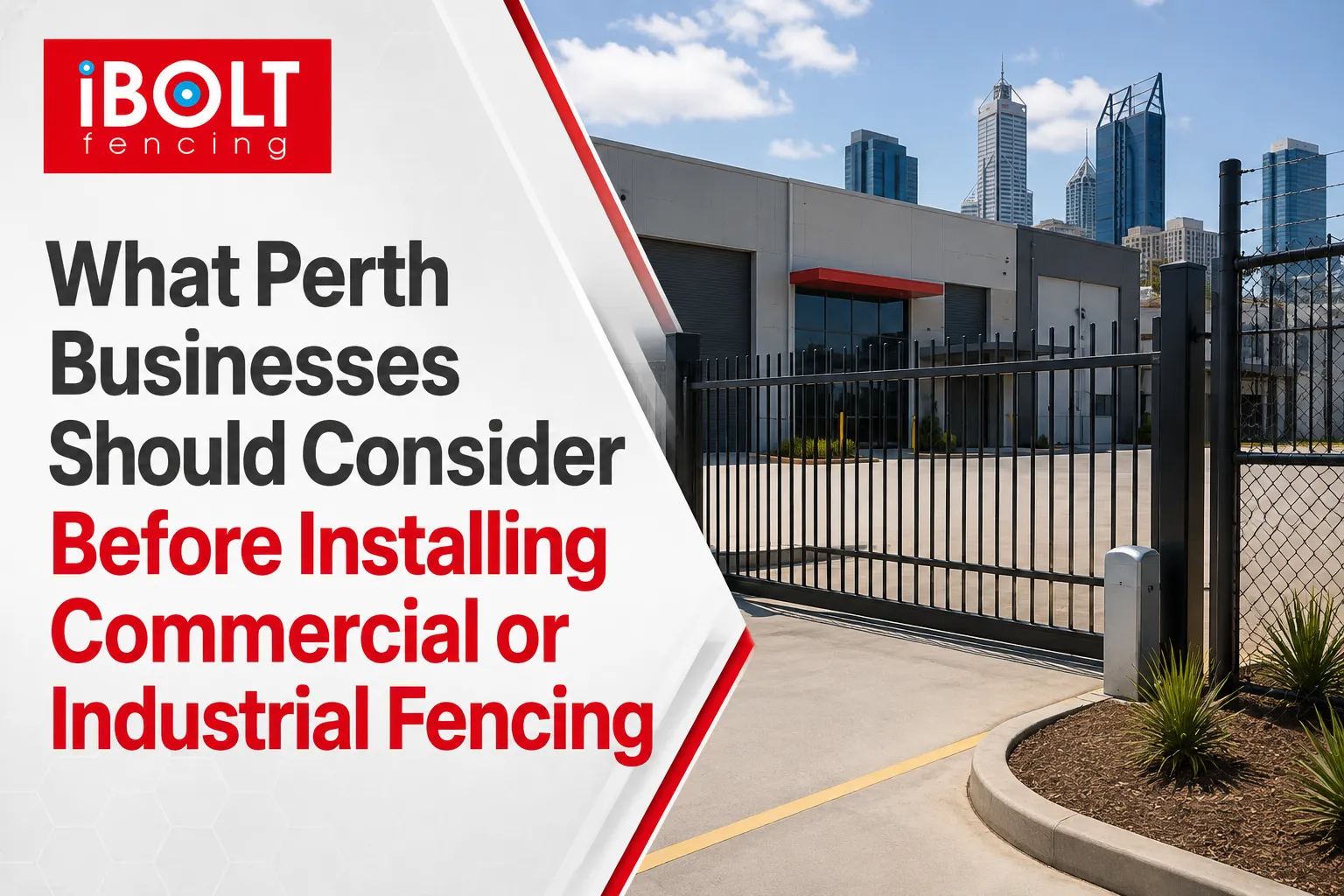
A commercial fence has to do considerably more than mark the edge of a property. It may need to control vehicle movement, protect equipment, guide visitors, discourage unauthorised access and remain practical for staff who use the site every day. For this reason, businesses researching commercial fencing perth should start by understanding how the property operates rather than selecting fencing on appearance alone.
Warehouses, workshops, factories, storage yards and commercial developments all have different access and security requirements. Planning these details early can make the finished perimeter easier to manage and reduce the need for avoidable alterations later.
Start With the Purpose of the Perimeter
Before comparing materials, decide what the fence actually needs to accomplish. A boundary around a customer-facing commercial property may have very different requirements from fencing around an industrial storage yard.
Commercial fencing Perth projects may be designed to:
-
Define property boundaries clearly
-
Restrict access to operational areas
-
Separate pedestrians from vehicles
-
Protect stored materials or equipment
-
Support controlled entry through gates
-
Improve the appearance of street-facing boundaries
-
Create dedicated zones within larger properties
Once the priorities are clear, it becomes easier to compare fence heights, profiles, gate systems and other design details.
Consider the Security Level Required
Not every site faces the same level of exposure. An office complex may mainly require boundary definition and controlled vehicle access, while a factory storing valuable equipment could require a more robust perimeter.
Businesses considering industrial fencing Perth should identify important areas before deciding on a configuration. Loading zones, plant areas, storage compounds and rear service sections may require different treatment from the main entrance.
Look Beyond the Front Boundary
It is easy to concentrate on the area visible from the street and overlook secondary access points.
Check less-visible areas carefully
Rear boundaries, side passages, adjoining vacant land and service lanes deserve attention because these areas may receive less routine observation. A complete fencing plan should consider the entire perimeter rather than treating the front entrance as the only important location.
Working with experienced industrial fencing perth providers can also help businesses evaluate how fencing and gates need to work together across operational parts of the site.
Match the Fence to Daily Site Activity
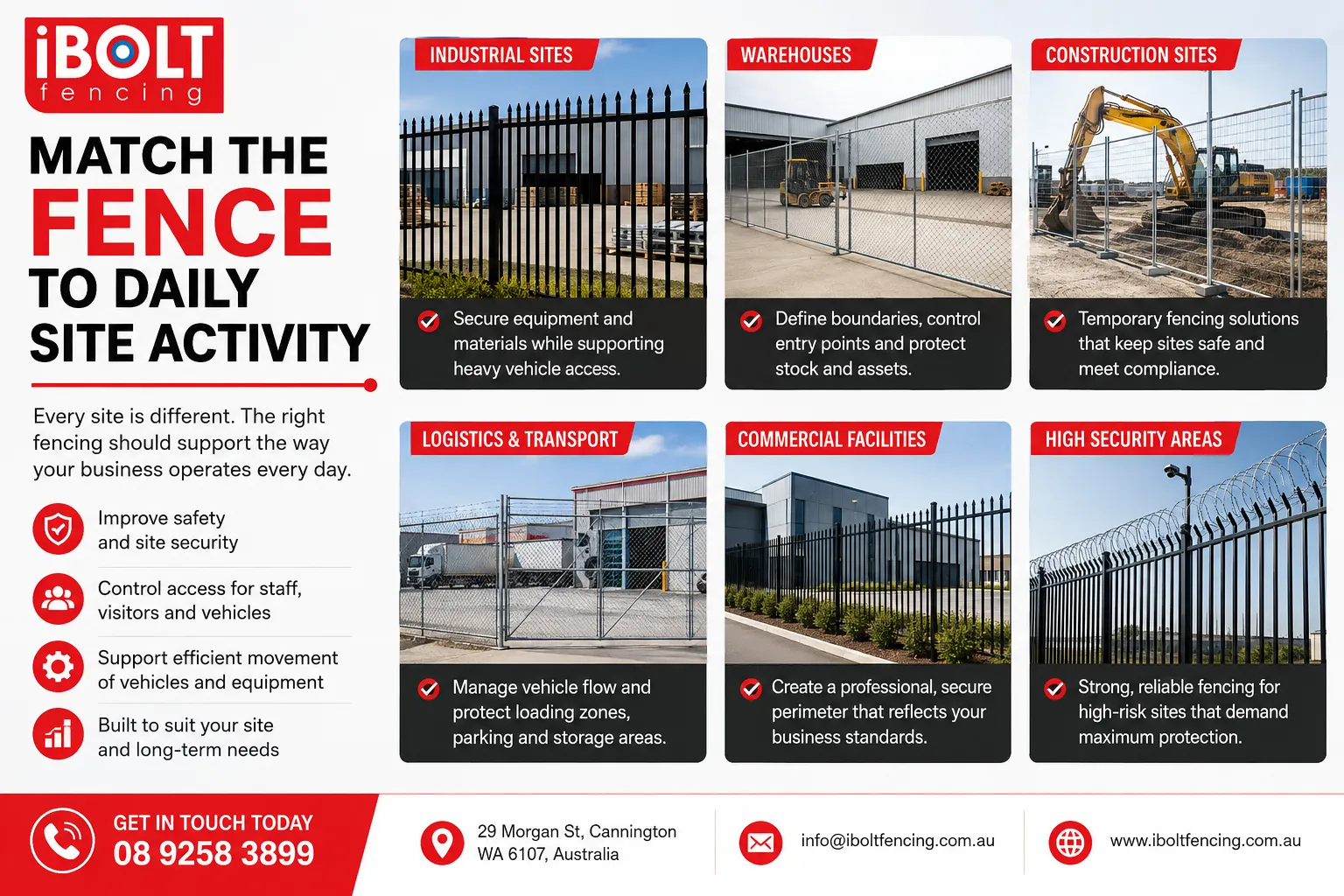
Security matters, but the fence cannot interfere unnecessarily with business operations.
Think about how the site functions during a normal day. Delivery vehicles may need wide access. Employees may require separate pedestrian gates. Forklifts might move between compounds, and contractors could need controlled access to service areas.
Ask practical questions such as:
-
How many vehicles enter during busy periods?
-
Are trucks or trailers regularly using the entrance?
-
Do employees and visitors use the same gate?
-
Are there areas that should remain inaccessible to customers?
-
Will gates need to remain open during particular hours?
-
Is future expansion likely to change traffic patterns?
These questions help turn perimeter fencing into part of the site’s overall operational layout.
Compare Suitable Fencing Types
Commercial and industrial sites can use several fencing styles depending on visibility, security, aesthetics and budget.
Chain mesh can be useful where visibility through the boundary is desirable. Palisade-style fencing provides a more imposing physical perimeter. Garrison-style fencing can combine clear visibility with a strong, structured appearance.
Commercial fencing Perth decisions should therefore be based on application rather than simply choosing whichever option appears strongest.
Think About Visibility
A completely screened boundary is not always beneficial. In some situations, open-style fencing allows staff or security cameras to maintain visibility across the perimeter.
Conversely, screening may be useful where equipment, waste areas or operational activity should be less visible from neighbouring properties.
Plan Gates at the Same Time as the Fence
Gates should never be treated as an afterthought. The strongest perimeter can become inconvenient if vehicle access has not been planned properly.
Gate design may be influenced by driveway width, available opening space, expected vehicle size and frequency of use. Some sites need one main access point, while others function better with separate entry and exit gates.
A well-planned gate should complement the fence and support the site’s access-control procedures without creating unnecessary congestion.
Think About Ground Conditions and Layout
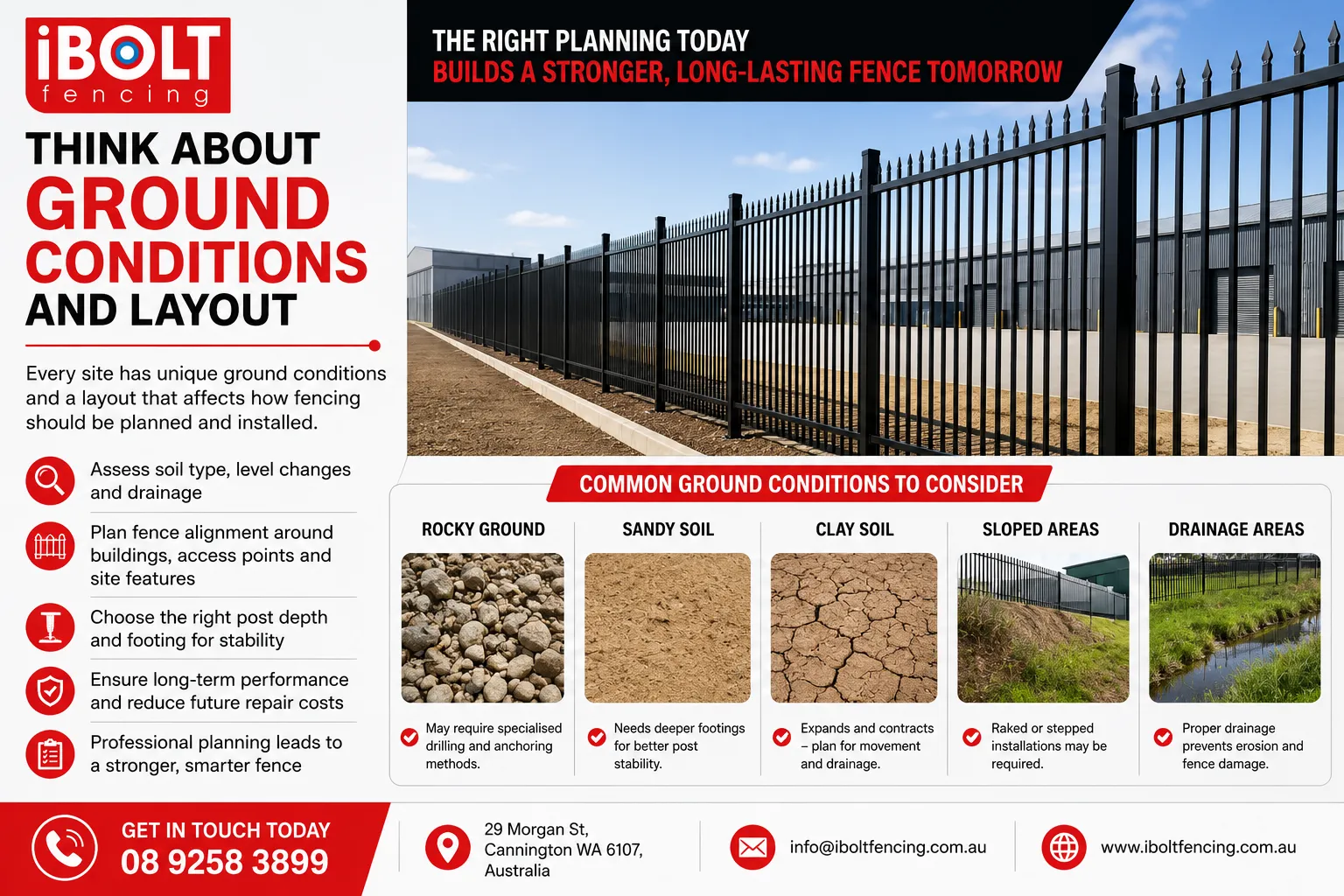
Commercial properties are rarely perfectly flat and unobstructed. Boundaries may include slopes, retaining walls, concrete areas, landscaped sections or existing structures.
Reliable fencing contractors perth can consider these physical conditions when planning post positions, fence transitions and gates. This is particularly important where an existing fence is being replaced because previous structures, footings or underground services may influence the new installation.
Fencing contractors Perth should also be given accurate information about future building works or planned site changes so the installation can accommodate them where practical.
Avoid Decisions Based Only on Initial Cost
Budget will naturally influence a project, but the cheapest initial option is not always the most suitable operational choice.
Consider how the fencing will be used over time. A busy gate, for example, needs to suit repeated movement. A fence next to active industrial operations may need different characteristics from one around a low-traffic office boundary.
Industrial fencing Perth projects benefit from evaluating suitability, layout, maintenance needs and accessibility alongside price.
Why Choose Us
A commercial fencing project works best when the design reflects what actually happens on the property. iBOLT Fencing can be considered by businesses looking for a practical approach to perimeter planning, fencing selection and gate integration.
Instead of viewing the fence as an isolated structure, the project can be considered in relation to access points, site layout and operational requirements. Clear discussion before installation also helps businesses make more informed decisions about the most appropriate fencing configuration.
About Us
iBOLT Fencing provides fencing solutions for commercial, industrial and other property requirements in Perth. The focus is on helping clients assess their perimeter needs and select fencing arrangements appropriate to the site.
For businesses comparing fencing contractors Perth, discussing security priorities, access requirements and physical site conditions at the beginning can help establish a clearer project scope and a more functional finished result.
Conclusion
Successful commercial or industrial fencing begins with planning. Security level, vehicle movement, pedestrian access, gate positioning, site conditions and future use should all influence the design.
Rather than selecting a fence purely by appearance or price, Perth businesses can achieve a more useful perimeter by matching the system to the way the property operates every day.
