
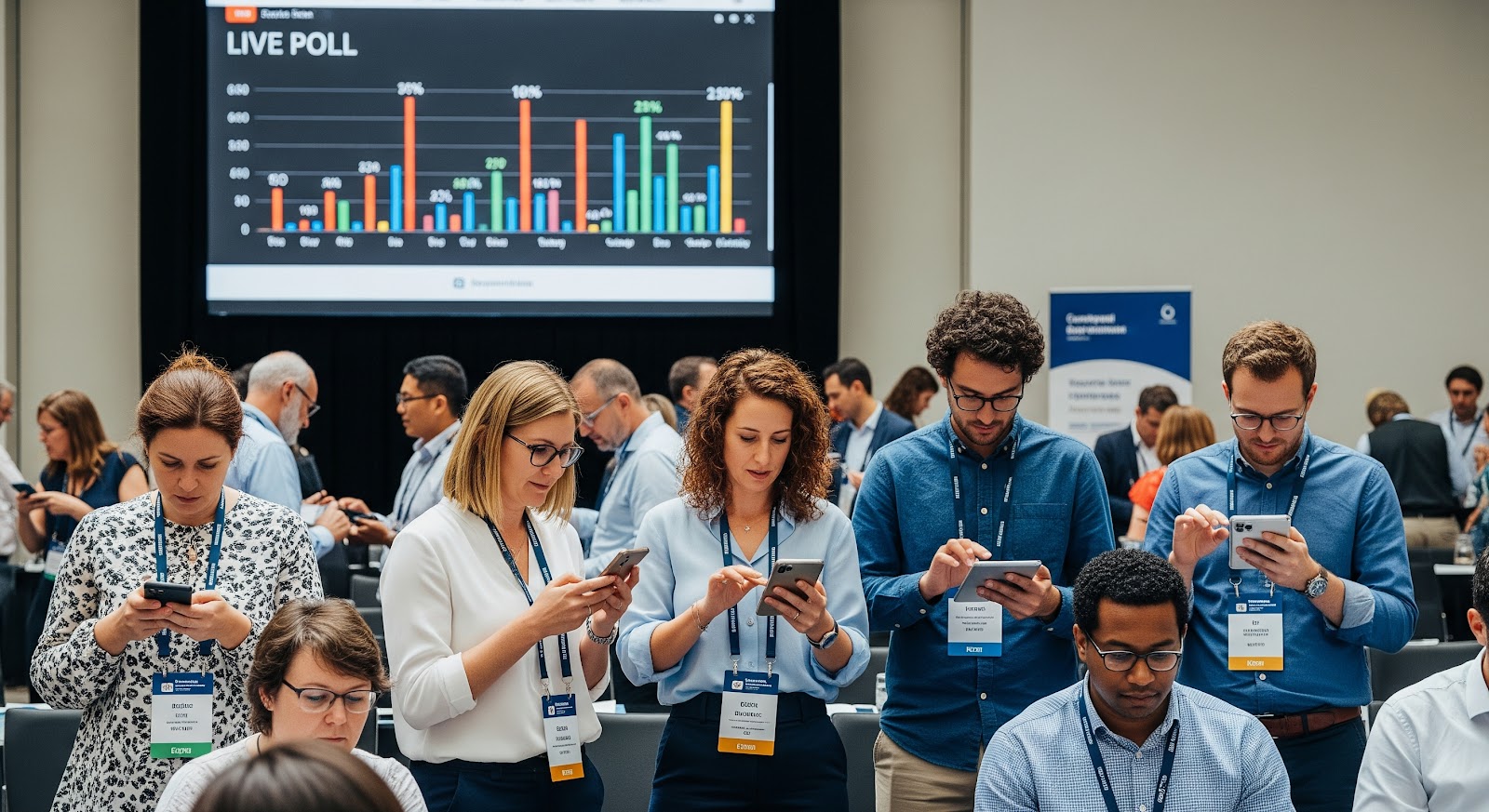
Getting people truly involved at events isn’t easy. You can line up top-tier speakers, polish your visuals, and rehearse every moment—yet attendees still check out mentally if they’re not feeling included. That’s where event live polls come in. They’re simple, flexible tools that turn passive audiences into active participants.
Whether you’re organizing a large in-person conference or a virtual roundtable, adding live polls to the mix can completely shift the dynamic. You’re not just delivering content—you’re inviting people into the conversation. This guide walks you through how to make the most of live polls before, during, and after your event.
Understanding Event Live Polls
What Are Event Live Polls?
At their core, live polls are real-time questions presented to attendees during a session. People vote or submit responses using their phones, tablets, or laptops. The results update instantly—either on screen or within an app—making the experience interactive and immediate.
Types of Live Polls Used in Events
There are several formats to choose from, depending on your goals. You can go with straightforward multiple-choice, open-ended responses for more nuanced input, yes/no questions, word clouds to visualize opinions, or even ranked-choice voting when decisions need to be prioritized.
How Live Polls Work in Real-Time Settings
Polls can be built in advance or launched on the fly. During the session, the presenter cues up a question, attendees respond, and the results are displayed in real time. This interaction not only keeps people alert—it also steers the conversation in more relevant directions.
Strategic Benefits of Using Live Polls at Events
Enhancing Audience Participation
When attendees feel like their input matters, they’re more likely to stay engaged. Live polls give everyone a voice—even the quiet ones in the back row or tuning in from home.
Gathering Instant Feedback for Event Optimization
You don’t need to wait until the event is over to find out what worked. Polls let you gather input on the spot and tweak things in real time. If attendees are bored or confused, a quick pulse check helps you pivot fast.
Driving Session Relevance and Real-Time Adaptation
Live responses tell you what’s landing and what’s missing the mark. That feedback loop allows speakers to adjust their delivery, dive deeper into high-interest areas, or switch gears entirely.
Generating Post-Event Data Insights
After the event, those poll responses become valuable data points. They can inform content planning for future events, help identify trends, or provide metrics to share with stakeholders.
Event Types That Benefit Most from Live Polls
Conferences and Corporate Events
For large gatherings, polls can break the ice, drive engagement in breakout sessions, and capture feedback on speakers and topics—all without slowing the pace.
Webinars and Online Workshops
In virtual settings, where attention spans are shorter, polls act like little anchors that bring people back into the conversation. They’re also great for measuring understanding in learning environments.
Product Launches and Trade Shows
Want to know what your audience thinks of a new product or feature? Polls let you ask in the moment and adjust your pitch or focus based on what people actually care about.
Networking Events and Roundtables
Polls can guide conversations, help match people with similar interests, or determine which discussion topics should take priority.
21 Smart & Creative Ways to Use Event Live Polls
Icebreaker Polls to Warm Up Attendees
Start your session with a light question—where people are from, what they’re most excited about, or even something humorous. It lowers the barrier to participation right from the start.
Pre-Session Knowledge Checks
Before diving into heavy content, run a few quick questions to see where your audience stands. It helps tailor the session and makes people feel more connected to the material.
Real-Time Session Feedback Loops
If the energy in the room is dipping, or you’re unsure how well a topic is landing, use a quick poll to check in and adjust accordingly.
Gamification and Trivia Polls
Turn learning into a challenge by adding polls that quiz your audience on key points. You can even keep score and offer small prizes to boost involvement.
Live Q&A Moderation with Poll Support
Let attendees submit questions during a session, then have the audience vote on which ones they most want answered. It keeps Q&A relevant and democratic.
Opinion Polls During Panel Discussions
Polling the audience before or during a panel makes the session more interactive. Plus, comparing audience views to panelist insights creates interesting discussion points.
Session Topic Selection via Audience Voting
Let people choose what they want to dive into next. Present a few options and have them vote—it’s a simple way to personalize content delivery.
Crowd-Sourced Challenges and Team Activities
Polls can shape group challenges or interactive tasks. Let the audience choose the theme or parameters, then break out into teams.
Polling to Drive Product Feedback at Expos
If you’re demoing something new, ask attendees what they like, what features they’d change, or what they’d pay for. It’s live market research.
Networking Preferences Polls
Before a networking session, ask participants what format they prefer—structured intros, casual mingling, or thematic breakouts. Tailor the structure based on their input.
Breakout Group Selection Polls
Instead of assigning people randomly, let them pick which breakout session or topic they want to join. They’ll be more engaged and invested.
Raffles and Prize Giveaways Based on Poll Participation
Encourage people to participate by linking polls to giveaways. Everyone who responds is entered into a draw, creating an easy incentive.
How to Implement Event Live Polls Effectively
Choosing the Right Polling Tool
Make sure your polling platform integrates smoothly with your event tech—especially if you’re managing both in-person and virtual components. It should be easy for attendees to use and reliable under pressure.
Designing Engaging Poll Questions
Keep your questions simple, relevant, and open enough to invite thought. Avoid jargon, and make sure your poll aligns with the flow of the session.
Integrating Polls with Event Apps or AV Systems
If you’re running a hybrid or in-person event, your polls need to be visible. That means syncing with presentation software, screens, or apps so no one misses the question—or the results.
Timing Your Polls Strategically
Use polls at key points: to kick things off, refocus attention mid-session, or close with a call to action. Don’t overdo it, or people will tune out.
Avoiding Common Mistakes in Live Polling
Overloading Attendees with Too Many Polls
It’s tempting to poll often, but that can backfire. Too many interruptions break the rhythm. Focus on quality over quantity.
Failing to Act on Poll Results
If people respond and nothing changes, they’ll feel ignored. Acknowledge the results, comment on them, or let them influence the direction of the session.
Ignoring Accessibility and Tech Limitations
Not everyone has the same devices or comfort level with tech. Make sure polls are accessible, mobile-friendly, and don’t require downloads or complex sign-ins.
Measuring Success and ROI of Live Polls
KPIs and Metrics to Track
Look at participation rates, response times, and engagement trends. These numbers give you a sense of what resonated—and what didn’t.
Using Poll Data for Future Event Planning
After the event, go over the results. They can guide future topics, highlight audience interests, and shape how you build your next agenda.
Conclusion: Main Key Takeaways
Event live polls offer an easy, effective way to make your events more interactive, insightful, and memorable. They help you understand your audience in real time, adjust content on the fly, and collect valuable feedback. With a little planning and creativity, polls can elevate any event format—from intimate workshops to massive conferences—by making sure every voice gets heard.
FAQs
How many polls should I include in a single event session?
Two to four polls is usually a good balance. Enough to boost engagement, but not so many that it feels forced.
What’s the best tool for running live polls at hybrid events?
Look for tools that work across devices and platforms, are easy to integrate, and support real-time display for both virtual and in-person attendees.
Can live polls be anonymous?
Yes. Most polling platforms let you collect responses without names, which often encourages more honest feedback.
How do I ensure high participation rates?
Make polls easy to access, time them well, and show that responses actually influence the event. A little incentive doesn’t hurt either.
